

Contents
- 1 Why Teeth Grinding Is More Harmful Than Most People Think
- 2 What Are Nightguards?
- 3 Types of Nightguards: Soft, Hard, and Dual Laminate
- 4 How Nightguards Protect Teeth
- 5 How Nightguards Protect Gums
- 6 Benefits of Using Dental Nightguards
- 7
- 8 Professionally Fitted Nightguards at Costello Family Dentistry
- 9 Frequently Asked Questions
- 9.1 Can teeth grinding cause gum recession?
- 9.2 How do nightguards protect the gums?
- 9.3 Are custom nightguards better than storebought ones?
- 9.4 What type of nightguard is best for heavy grinders?
- 9.5 Will a nightguard stop my grinding completely?
- 9.6 Is a nightguard covered by dental insurance in Canada?
QUICK ANSWER
Nightguards protect gums and teeth by acting as a cushioned barrier that absorbs and evenly distributes the powerful forces generated by teeth grinding (bruxism). This prevents enamel wear, tooth fractures, and gum recession caused by excessive pressure. Nightguards also stabilize the teeth, reducing the micro-movements that can loosen roots and damage the bone and gum tissue supporting each tooth. Custom-fitted nightguards from a dentist offer superior protection compared to over-the-counter alternatives.
Why Teeth Grinding Is More Harmful Than Most People Think
Life introduces stress in countless ways. While some people release tension through exercise or relaxation, others grind or clench their teeth, often without realizing it.
If you regularly wake with jaw soreness, headaches, or tooth sensitivity, you may have bruxism. This condition can occur both during sleep and while awake. Over time, grinding places excessive forces on teeth, gums, and jaw joints, leading to:
• Enamel wear and cracks
• Tooth sensitivity and decay
• Gum recession
• Loosened teeth
• Damage to crowns, veneers, and fillings
A properly designed nightguard is one of the most effective ways to interrupt this cycle of damage.
What Are Nightguards?

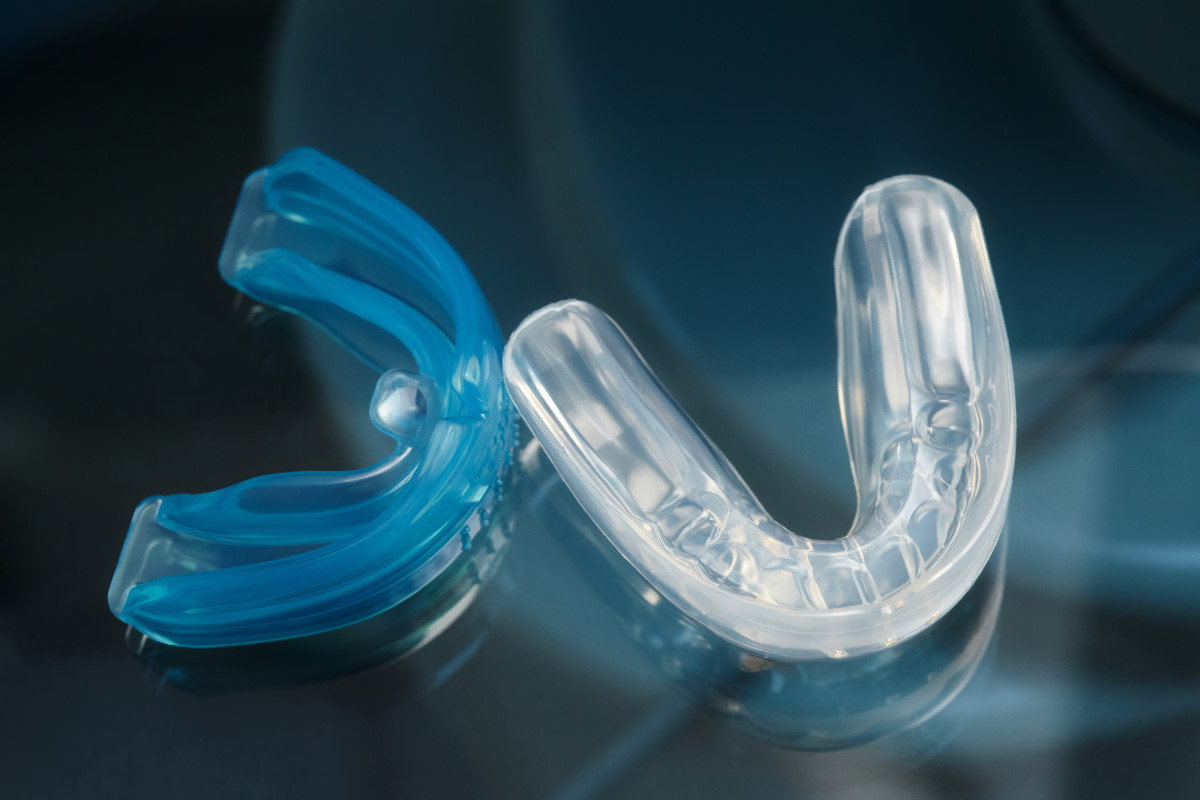
Similar to a retainer, a nightguard is a transparent appliance: either hard, soft, or a combination of both, that fits over the biting surfaces of your upper or lower teeth. Because no two people have identical biting patterns, an effective nightguard must be custom-made using a precise dental impression or digital scan.
Store-bought boil-and-bite guards soften in hot water and are then moulded by biting down, but they tend to be thick, bulky, and force the jaw into an uncomfortable position. Custom guards from your dentist are far more effective because they are trimmed and balanced to your exact arch, ensuring a comfortable, low-profile fit that you can actually wear all night.
Types of Nightguards: Soft, Hard, and Dual Laminate
Not all nightguards are built the same. The right material depends on how severely you grind, your jaw anatomy, and whether you have TMJ involvement:
SOFT NIGHTGUARD — For Mild to Moderate Grinders |
• Material: Flexible, rubber-like polymer |
HARD NIGHTGUARD — For Heavy Grinders & TMJ |
• Material: Rigid acrylic |
DUAL LAMINATE — Best of Both Worlds |
• Material: Soft inner layer + hard outer shell |
✓ Clinical Note: Your dentist will assess your bruxism severity, jaw joint health, and existing dental work to recommend the appropriate type. There is no one-size-fits-all nightguard.
How Nightguards Protect Teeth
Teeth grinding can generate bite forces of up to 250 pounds per square inch, far beyond the 20–40 lbs typical of normal chewing. A custom nightguard intercepts damage in several ways:
1. Shock Absorption and Force Distribution
A nightguard works mechanically like a shock absorber. When your jaw muscles contract during sleep, the guard material flexes and spreads the bite force across the full arch of the guard rather than concentrating it on individual tooth surfaces. This even distribution of pressure dramatically reduces the peak force any single tooth or root must withstand, preventing microfractures and deeper structural cracks.
2. Prevention of Enamel Erosion
Tooth enamel is the hardest substance in the human body, but it does not regenerate. When upper and lower enamel surfaces grind directly against each other night after night, both surfaces wear simultaneously. A nightguard places a layer of protective material between the arches, so the guard wears down instead of your irreplaceable enamel.
3. Protection of Existing Dental Work
Crowns, porcelain veneers, composite fillings, bridges, and implant crowns are all vulnerable to bruxism. Grinding forces can chip or fracture a crown, crack the porcelain on a veneer, dislodge a filling, or loosen implant components. Replacing a single crown in Ontario can cost $1,000–$2,000 or more. A custom nightguard, costing a fraction of that, is one of the best investments you can make to protect existing dental work.
⚠ If you have received veneers, implants, or a full-mouth restoration, speak to your dentist about nightguard protection before grinding damages your investment. ⚠
4. Tooth Stabilization (Splinting Effect)
Severe bruxism does not just wear surfaces; it can actually loosen teeth. The repetitive lateral grinding forces place abnormal stress on the periodontal ligament fibres that anchor each tooth to the jawbone. A well-fitted nightguard acts like a temporary splint, holding the teeth in stable alignment during sleep and preventing the micro-movements that would otherwise gradually loosen roots and compromise bone support.
Ways nightguards protect your teeth:
• Absorb and distribute extreme bite forces across the full dental arch
• Prevent enamel-to-enamel contact that causes irreversible wear
• Shield crowns, veneers, fillings, and implant restorations from grinding forces
• Stabilize teeth to prevent progressive loosening and root damage
• Reduce the risk of catastrophic tooth fractures from clenching
How Nightguards Protect Gums
Most people associate nightguards with tooth protection, but gum health is equally at stake when bruxism goes untreated. Grinding creates mechanical stresses that travel through the teeth, into the periodontal ligament, and into the bone and soft tissue that support your teeth.
• Gum Recession Caused by Grinding
Gum recession, where the gum line pulls away from the tooth and exposes the root, is most commonly linked to gum disease or aggressive brushing, but bruxism is a significant and often overlooked contributor. The excessive lateral forces generated by grinding flex the tooth at its neck (just below the gum line), stressing the gum attachment. Over time, this causes the gum tissue to recede, leaving the sensitive root surface exposed to decay, cold sensitivity, and further recession.
• Periodontal Stress and Pressure Distribution
The periodontium, the collective term for the gums, periodontal ligament, cementum, and alveolar bone, is designed to handle normal chewing forces. It is not designed for the sustained, extreme forces of bruxism. Chronic overloading inflames the periodontal ligament, accelerates bone resorption (bone loss around the roots), and can worsen existing gum disease. By absorbing and redistributing bite forces, a nightguard reduces the mechanical stress delivered to the periodontium during sleep.
• Bone and Gum Support at Night
When you sleep, your body is in a repair and regeneration cycle. For your gums and supporting bone, this means tissue remodeling and inflammatory healing processes. Bruxism during sleep interrupts this process by continuously stressing the attachment between tooth and bone. A nightguard gives your periodontium the undisturbed overnight rest it needs to maintain healthy bone density and gum attachment levels.
Chronic bruxism is not just a cosmetic concern. The bite forces it generates, sometimes exceeding normal chewing loads by a factor of six or more, can accelerate periodontal bone loss, trigger gum recession, and compromise the long-term stability of teeth that might otherwise remain healthy for a lifetime. A properly fitted nightguard is a low-cost, high-impact intervention that interrupts this cycle of damage.
— Clinical perspective, Costello Family Dentistry, Carleton Place, ON
Ways nightguards protect your gums:
• Reduce the lateral forces that cause gum recession at the tooth neck
• Decrease mechanical stress on the periodontal ligament and alveolar bone
• Prevent tooth micro-movements that progressively damage gum attachment fibres
• Allow gum tissue to undergo natural overnight repair without mechanical disruption
• Slow the acceleration of gum disease in patients who also have periodontitis
• Protect exposed root surfaces in patients who already have some recession
Benefits of Using Dental Nightguards
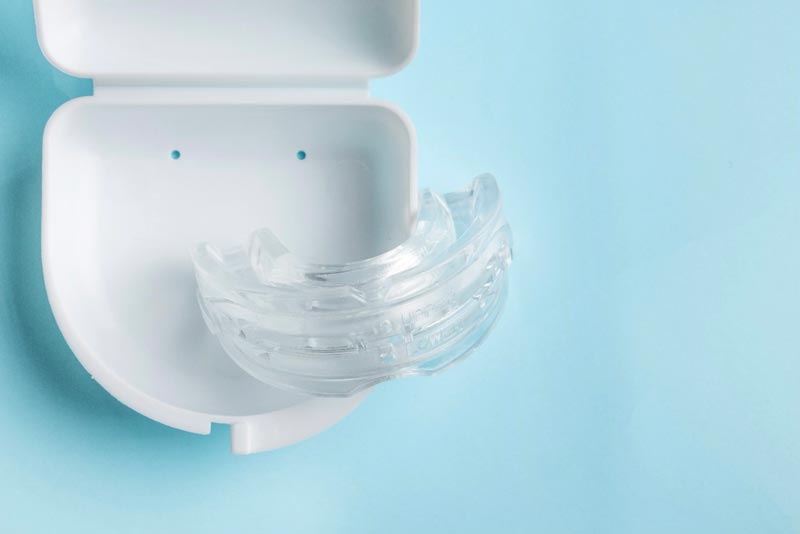
Nightguards act as a barrier between the top and bottom teeth, cushioning impact when you grind. This helps reduce the stress and tension placed on muscles and jaw joints, causing fewer issues with pain and headaches. A proper nightguard is essential in preventing tooth damage caused by clenching and grinding: chipped teeth, cracked enamel, and worn biting surfaces are all predictable consequences of untreated bruxism.
Bruxism is also one of the most common causes of temporomandibular joint disorder (TMJ), where the muscles and ligaments used for chewing become tight and inflamed. Wearing a nightguard eases muscle fatigue and tension, relieving the pain associated with TMJ.
What nightguards protect against:
• Enamel erosion — guards against surface-to-surface tooth wear
• Tooth fractures and chips — cushions the impact forces of clenching
• Gum recession — reduces the lateral forces that pull gums away from teeth
• Periodontal bone loss — decreases abnormal loading on supporting bone
• Crown, veneer, and filling damage — shields restorations from grinding forces
• Tooth mobility — splinting effect stabilizes roots in their sockets
• TMJ disorders — reduces muscular and joint overload during sleep
• Headaches and facial pain — lessens jaw muscle fatigue and tension
• Custom Nightguards vs. Store-Bought: Why the Difference Matters
Pharmacy boil-and-bite guards may seem like a convenient alternative, but clinical differences between custom and over-the-counter options are significant, especially for patients with gum health concerns or existing dental work.
Feature | ✓ Custom (Dentist) | ✗ Store-Bought (OTC) |
Fit precision | Exact impression of your teeth | Generic approximation |
Jaw alignment | Balanced to your bite; jaw rests naturally | Can shift jaw into unnatural position |
Gum coverage | Precisely trimmed to gum line; no tissue irritation | Often too thick at margins; can irritate gums |
Force distribution | Designed to evenly distribute pressure across all teeth | Uneven contact can create pressure hot spots |
Durability | Lab-grade materials; lasts 3–5 years | Soft material degrades quickly; months at best |
Airway safety | Thin profile; does not impede breathing | Bulk can partially obstruct airway in some patients |
| Compliance | Comfortable enough to wear every night | Discomfort leads to inconsistent use |
✓ Bottom line: A store-bought guard may reduce some grinding impact short term, but cannot match the precision fit, jaw positioning, and durable gum protection of a dentist-fabricated custom nightguard.
Professionally Fitted Nightguards at Costello Family Dentistry
Do you find yourself frequently waking up with a sore jaw and a headache? Chipped and overly sensitive teeth, sore jaws, headaches, and tense facial muscles are all signs of bruxism. At Costello Family Dentistry in Carleton Place, ON, we take impressions or digital scans of your teeth and have your guard fabricated by a dental laboratory. The result is a precision-fit appliance that protects your teeth, gums, and jaw without the bulk or jaw misalignment associated with pharmacy guards.
Although it may take a few nights to adjust to the feeling of wearing a nightguard, the long-term benefits: protected enamel, stable gum tissue, preserved dental work, and reduced jaw pain, far outweigh the brief adaptation period.
Frequently Asked Questions
Can teeth grinding cause gum recession?
Yes. Teeth grinding puts excessive pressure on the gums, which can cause them to slowly pull away from the teeth. This exposes tooth roots and increases sensitivity and decay risk.
How do nightguards protect the gums?
Nightguards absorb and spread biting forces, reducing stress on the gums and tooth attachment. They also prevent harmful tooth movement during sleep.
Are custom nightguards better than storebought ones?
Yes. Custom nightguards fit your teeth precisely, distribute pressure evenly, and are more comfortable and durable, making them far more effective.
What type of nightguard is best for heavy grinders?
Heavy grinders usually need a hard acrylic or duallaminate nightguard. Soft guards can wear down quickly and may increase clenching.
Will a nightguard stop my grinding completely?
No. A nightguard doesn’t stop grinding, but it protects your teeth and gums from damage and may reduce grinding intensity.
Is a nightguard covered by dental insurance in Canada?
Coverage varies by plan. Many Canadian dental insurance plans offer partial coverage when bruxism is diagnosed by a dentist.