

You should avoid coffee right after a tooth extraction. Hot beverages and suction (from straws) can dislodge the blood clot, raising risk of dry socket. Wait 48–72 hours, then start with lukewarm or iced coffee (no straws), and only return to hot coffee after about 1 week—if healing is smooth.
Contents
Key Takeaways:
Avoid coffee for the first 48 hours minimum.
Dry socket is a painful risk from hot drinks or suction.
After 5–7 days, lukewarm coffee may be safe.
Use no straws, no smoking, and gentle rinsing.
Try herbal teas, smoothies, or decaf as safer substitutes.
Tooth extraction is a common dental procedure that many people undergo for various reasons, including decay, crowding, or impaction. While the thought of sipping your favorite cup of coffee might be tempting after the procedure, it’s crucial to understand how this beloved beverage can impact your recovery. This article will explore the implications of drinking coffee post-extraction, the healing process, and alternative options to consider during your recovery.
Understanding the Healing Process
After a tooth is extracted, your body initiates a healing process that is vital for recovery. The first step involves the formation of a blood clot in the socket where the tooth was removed. This clot serves as a protective barrier, shielding the underlying bone and nerves from exposure and infection.
The Importance of Blood Clots
Blood clots are essential for healing. They not only protect the extraction site but also facilitate the growth of new tissue. If the clot is dislodged prematurely, it can lead to a painful condition known as dry socket. This occurs when the bone and nerves are exposed, resulting in significant discomfort and delayed healing.
Factors Influencing Recovery
Several factors can influence how quickly and effectively you heal after a tooth extraction. These include:
- Individual Health: Pre-existing health conditions can affect healing times.
- Complexity of Extraction: More complicated extractions may require longer recovery periods.
- Post-Operative Care: Following your dentist’s aftercare instructions is crucial for a smooth recovery.
For more on this topic, see our article: Tooth Extraction in Carleton Place: Why & When a Tooth Needs to Be Removed
Risks of Drinking Coffee After Extraction
While coffee is a staple for many, it’s essential to consider its effects on your recovery after a tooth extraction. Drinking coffee too soon can pose several risks.
Potential Complications
1. Dry Socket: Hot beverages can dislodge the blood clot, increasing the risk of dry socket. This painful condition can significantly hinder your recovery.
2. Burns: If your mouth is still numb from anesthesia, you may accidentally burn yourself with hot coffee, leading to further complications.
3. Increased Pain: The heat from coffee can irritate the extraction site, exacerbating any discomfort you may already be experiencing.
4. Slower Healing: Caffeine can elevate blood pressure, which may lead to increased bleeding at the extraction site and slow down the healing process.
When Can You Resume Drinking Coffee?
The timeline for reintroducing coffee into your diet after a tooth extraction varies based on individual healing and the complexity of the procedure. However, general guidelines can help you determine when it’s safe to enjoy your favorite brew again.
Initial Recovery Period
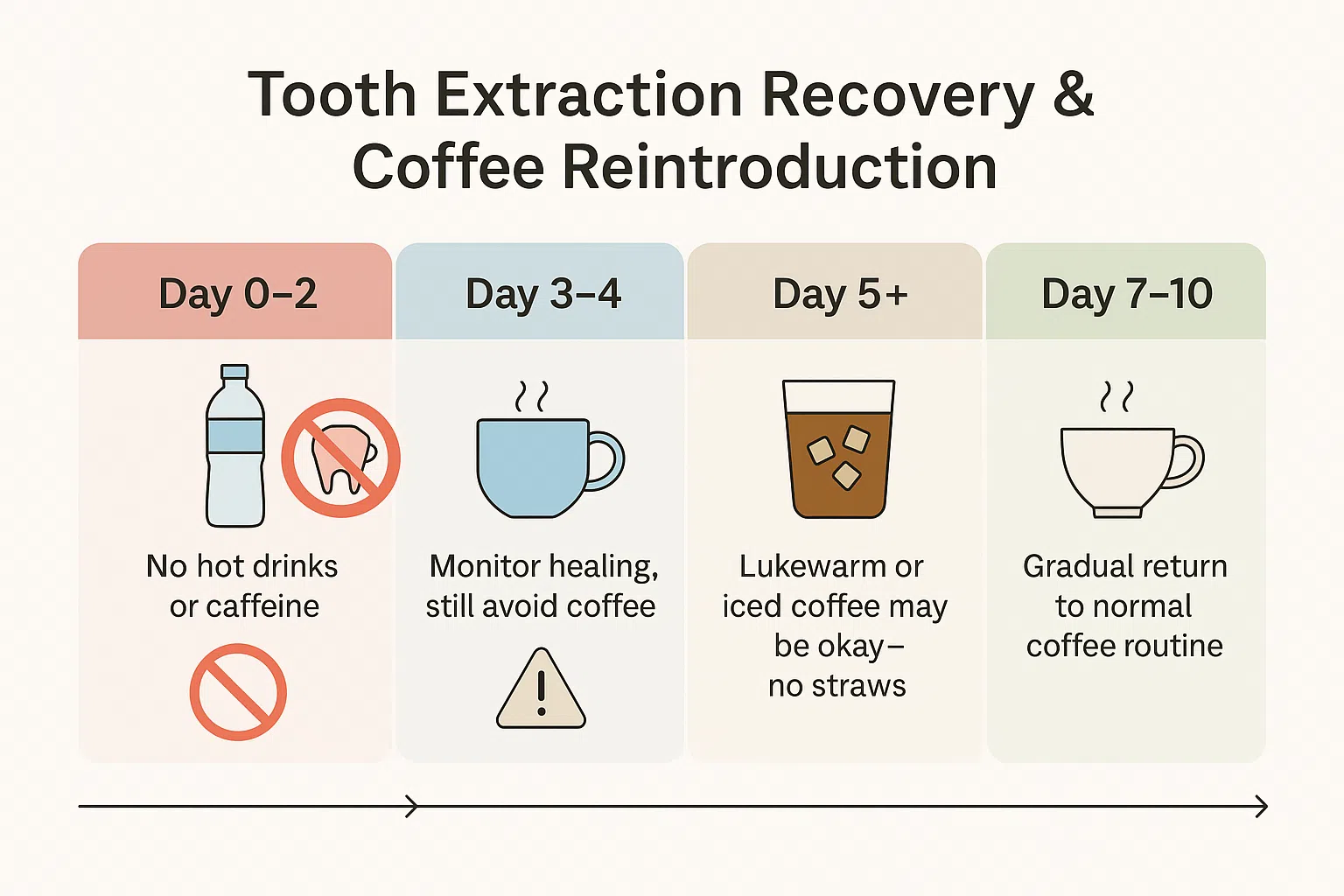
For the first 24 to 48 hours post-extraction, it’s advisable to avoid all hot beverages, including coffee. During this time, your body is forming the crucial blood clot, and any disturbance can lead to complications.
Gradual Reintroduction
After the initial healing phase, you may consider reintroducing coffee, but with caution:
- Wait at Least 5 Days: Most dental professionals recommend waiting at least five days before consuming coffee again.
- Opt for Lukewarm: If you choose to drink coffee, ensure it’s lukewarm or at room temperature to avoid irritating the extraction site.
Craving coffee? Try cold brew decaf in small sips (no straw) after Day 5, but only if your healing is going well.
- Monitor Your Body’s Response: Pay attention to how your body reacts after consuming coffee. If you experience increased pain or discomfort, it may be best to wait longer before trying again.
If pain or irritation occurs, delay coffee consumption further and contact your dentist.
Tips for Enjoying Coffee Safely
If you’re eager to enjoy coffee after your extraction, here are some tips to minimize risks:
Key Precautions to Protect the Blood Clot
Before reintroducing coffee, it’s crucial to follow these universally recommended precautions to avoid complications such as dry socket:
- No straws or suction — suction can dislodge the protective clot, increasing the risk of dry socket.
Never use straws during recovery. Suction can dislodge the clot and trigger a dry socket, which is painful and delays healing.
- Don’t smoke or use tobacco — nicotine and smoke impair healing and greatly raise the risk of dry socket.
- Avoid hot, caffeinated, carbonated, and alcoholic beverages early on — these can delay clot stabilization and irritate the wound.
- After the first 24 hours, gently rinse with warm salt water (½ teaspoon salt in 8 oz water) several times a day.
- Avoid vigorous rinsing or spitting — let the rinse drip out naturally to protect the clot.
Safe Coffee Practices
Choose the Right Temperature
- Lukewarm or Iced Coffee: Opt for coffee that is not hot. Iced coffee can be a refreshing alternative that won’t irritate your mouth.
- Avoid Straws
- No Straws: Using a straw can create suction in your mouth, which may dislodge the blood clot and lead to dry socket. Instead, take small sips directly from the cup.
Stay Hydrated
- Drink Water: Hydration is essential for recovery. Ensure you’re drinking plenty of water alongside any coffee to keep your mouth clean and promote healing.
Drink room-temperature water or herbal teas the first few days post-surgery to stay hydrated without irritating your wound.
Monitor Your Healing
- Watch for Symptoms: If you notice any unusual symptoms, such as prolonged bleeding or increased pain, contact your dentist for advice.
For dietary guidance during recovery, check out Top Foods to Avoid for Healthy Teeth and Gums.
Alternatives to Coffee During Recovery
If you find it challenging to stay away from coffee, consider these alternatives that won’t interfere with your healing process:
Herbal Teas
- Caffeine-Free Options: Herbal teas can provide a warm beverage without the caffeine, making them a soothing alternative during recovery.
Decaffeinated Coffee
- Room Temperature Decaf: If you miss the taste of coffee, consider decaffeinated options at room temperature. This can satisfy your cravings without the risks associated with caffeine.
Smoothies
- Nutrient-Rich Blends: Smoothies can be a delicious way to stay nourished while avoiding hot beverages. Blend fruits and vegetables for a refreshing drink that supports healing.
Also see: The Benefits of Regular Dental Check-Ups to keep your mouth healthy long-term.
The Role of Diet in Recovery
Your diet plays a significant role in how well you heal after a tooth extraction. Consuming the right foods can aid in recovery and minimize discomfort.
Recommended Foods
- Soft Foods: Stick to soft, bland foods like mashed potatoes, yogurt, and scrambled eggs for the first few days.
- Nutrient-Dense Options: Incorporate foods rich in vitamins and minerals to support healing, such as leafy greens and lean proteins.
Foods to Avoid
- Hard or Crunchy Foods: Avoid anything that requires excessive chewing, as this can irritate the extraction site.
- Spicy or Acidic Foods: These can cause discomfort and should be avoided during the initial healing phase.
Monitoring Your Recovery
Keeping track of your recovery progress is essential. Here are some signs to watch for:
Normal Healing Signs
- Reduced Swelling: Swelling should gradually decrease over the first few days.
- Minimal Pain: Discomfort should lessen as the days go by.
When to Seek Help
- Increased Pain: If you experience worsening pain or swelling, contact your dentist.
- Prolonged Bleeding: Any significant bleeding that doesn’t subside should be addressed immediately.
In either case, don’t hesitate to contact Costello Dentistry for follow-up care.
Do’s & Don’ts: Protect Your Blood Clot
Before we wrap up, here’s a quick recap of the most important do’s and don’ts to protect your blood clot and avoid complications like dry socket:
| ✅ Do’s | ❌ Don’ts |
|---|---|
| ✔ Gently rinse with salt water after 24 hours | ✘ No straws or suction |
| ✔ Drink plenty of water | ✘ No smoking or tobacco |
| ✔ Eat soft foods (yogurt, mashed potatoes, smoothies) | ✘ No hot liquids, caffeine, carbonation |
| ✔ Always follow dentist instructions | ✘ No vigorous rinsing or spitting |
Conclusion
While the allure of coffee may be strong, it’s essential to prioritize your healing after a tooth extraction. By understanding the risks associated with drinking coffee too soon and following your dentist’s recommendations, you can ensure a smoother recovery. Remember to be patient and allow your body the time it needs to heal properly. Before you know it, you’ll be back to enjoying your favorite cup of coffee without any complications.
For expert post-op care and personalized recovery advice, trust the team at Costello Dentistry in Carleton Place.
FAQs
Q: Can I drink iced coffee instead of hot coffee?
A: Yes, but only after 3–5 days and without a straw. The suction from straws can dislodge the blood clot and cause dry socket. Make sure the coffee is mild and not too acidic.
Q: When is it safe to drink hot coffee again?
A: Most dentists recommend waiting at least 7–10 days before reintroducing hot beverages. Heat can irritate the socket and delay healing. Always start with lukewarm drinks first.
Q: What are signs of dry socket I should watch for?
A:
- Severe pain 2–4 days after extraction
- Visible bone in the socket
- Bad taste or foul odor in the mouth
- Pain radiating to the ear, jaw, or neck
If you notice these, call your dentist right away.
Q: What can I drink instead of coffee during recovery?
A:
- Cool or lukewarm herbal teas (caffeine-free)
- Room-temperature decaf coffee
- Fruit or veggie smoothies (without a straw)
- Plenty of water to stay hydrated
Q: Why are straws dangerous after extraction?
A: Straws create suction that can pull the protective blood clot out of the socket. This exposes nerves and bone, leading to dry socket. Always sip directly from a cup.