

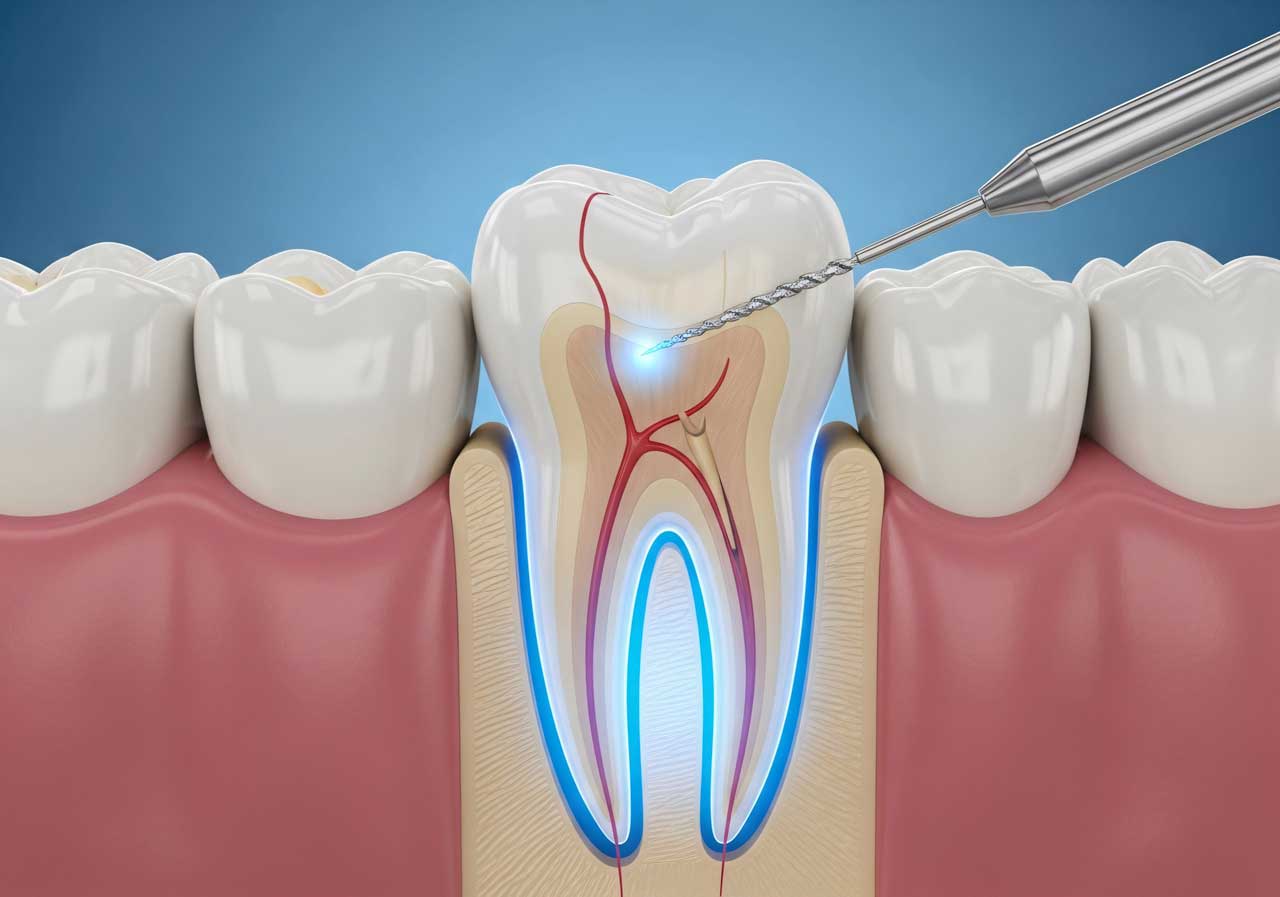
A root canal is a common dental procedure used to treat infection inside a tooth and relieve pain. Modern root canal treatments are safe, effective, and comfortable. Symptoms like lingering pain, sensitivity, or swollen gums may indicate you need one.
With proper care and restoration, a root canal-treated tooth can last a lifetime.
Contents
- 1 What Is a Root Canal?
- 2 Understanding Tooth Anatomy
- 3 Why Is a Root Canal Needed?
- 4 Signs You May Need a Root Canal
- 5 What Happens During a Root Canal? (Step-by-Step Process)
- 6 Is a Root Canal Painful?
- 7 How Long Does a Root Canal Take?
- 8 Recovery After a Root Canal
- 9 Common Root Canal Myths
- 10 Frequently Asked Questions (FAQs)
- 11 Final Thoughts
What Is a Root Canal?
A root canal is a dental procedure designed to treat infection or inflammation inside a tooth’s pulp — the soft tissue that contains nerves and blood vessels.
When the pulp becomes infected due to deep decay, cracks, or trauma, it can cause intense pain and lead to serious dental complications. A root canal removes the infected tissue, cleans the inside of the tooth, and seals it to prevent future infection.
Understanding Tooth Anatomy
Knowing how a tooth is structured makes root canal treatment easier to understand. The main components include:
- Enamel: The hard outer layer that protects the tooth.
- Dentin: The layer beneath the enamel, which is softer and contains microscopic tubules.
- Pulp: The innermost part, housing nerves and blood vessels.
- Root: The part of the tooth embedded in the jawbone, anchoring it in place.
Why it matters:
Once bacteria reach the pulp, the infection cannot heal on its own — treatment is necessary.
Why Is a Root Canal Needed?
Root canal treatment is necessary when the pulp becomes infected or inflamed due to:
- Deep Cavities: Bacteria can penetrate through cavities, reaching the pulp.
- Cracked or Chipped Teeth: Physical trauma can expose the pulp to bacteria.
- Repeated Dental Procedures: Multiple treatments on the same tooth can lead to pulp damage.
- Gum Disease: Advanced gum disease can affect the health of the pulp.
If left untreated, an infected pulp can lead to abscesses, bone loss, and ultimately tooth loss. Therefore, understanding the importance of a root canal is vital for maintaining oral health.
Signs You May Need a Root Canal
Recognizing the symptoms that indicate the need for a root canal can help you seek timely treatment. Common signs include:
- Severe Tooth Pain: Persistent pain, especially when chewing or applying pressure.
- Sensitivity: Lingering sensitivity to hot or cold temperatures, even after the stimulus is removed.
- Swollen Gums: Tenderness or swelling around the affected tooth.
- Discoloration: A tooth that appears darker than surrounding teeth may indicate pulp damage.
- Pimples on Gums: Small bumps or sores on the gums near the painful tooth can signal infection.
If these symptoms appear, schedule a dental evaluation as soon as possible.
What Happens During a Root Canal? (Step-by-Step Process)
If you prefer a simplified explanation, our Root Canal Basics Resource Page breaks down what to expect.
Is a Root Canal Painful?
No — modern root canals are far more comfortable than their reputation suggests. However, with modern techniques and anesthesia, the procedure is generally no more uncomfortable than receiving a routine filling. Most patients feel little to no discomfort
- Pain afterward is usually mild and temporary
- Many people feel immediate relief once the infection is removed
Pain Management Tip: Over-the-counter medications like ibuprofen or acetaminophen are usually sufficient.
How Long Does a Root Canal Take?
Generally, the procedure usually takes 30 minutes to 2 hours, and the duration of a root canal procedure can vary based on several factors depending on:
- Tooth location
- Number of roots
- Severity of infection
Some complex cases may require multiple visits.
Recovery After a Root Canal
Post-procedure recovery is typically straightforward. Here’s what to expect:
- Initial Recovery
Your mouth may feel numb for a few hours after the procedure. Avoid eating until the numbness wears off to prevent biting your cheek or tongue. - Pain Management
Some mild soreness is normal for a few days. Over-the-counter pain medication can help. If the pain gets worse or doesn’t improve, contact your dentist. - Follow-Up Care
Your dentist may schedule a follow-up visit to check healing and see if you need a crown or other treatment.
Common Root Canal Myths
Myth | Reality |
Root canals cause illness | No scientific evidence supports this |
Root canals are extremely painful | Modern procedures are comfortable |
Tooth extraction is better | Saving your natural teeth is usually best |
Frequently Asked Questions (FAQs)
- Is a root canal painful?
With proper anesthesia, most patients feel minimal discomfort during treatment.
- How long does a root canal last?
With good oral hygiene and a crown, the treated tooth can last a lifetime.
- Do I always need a crown after a root canal?
In most cases, yes — crowns protect the teeth from fracture.
- What happens if I delay treatment?
Delaying can worsen infection, increase pain, and lead to tooth loss.
Final Thoughts
Root canals are a safe, effective, and tooth-saving solution for dental infections. Understanding the procedure helps eliminate fear and empowers you to seek timely care.
If you’re experiencing symptoms or suspect you may need a root canal, consult a qualified dental professional promptly. Preserving your natural teeth is always the best choice — and root canals make that possible.
At Costello Family Dentistry, our experienced team provides gentle, patient‑focused root canal treatment designed to keep you comfortable from start to finish. We take the time to explain your options, answer your questions, and ensure you feel fully supported throughout your care.
Your comfort, oral health, and long‑term smile are our top priorities. If you suspect you may need a root canal, we’re here to help you take the next step with confidence.